
A 7-Eleven Japan snack run costs less than a cup of coffee back home. Most of the good stuff sits between ¥100 and ¥198, which is roughly $0.65 to $1.30 USD at 2026 exchange rates.
The part that catches people off guard: these aren't gas-station-quality snacks. Japanese konbini restock shelves multiple times per day, and expiry dates lean conservative compared to stores outside Japan.
This guide is for the budget-conscious traveler landing in Tokyo, Osaka, or Kyoto and staring at shelves full of unfamiliar packaging. If you can spend ¥1,000 (about $6.50), you walk out with a full spread.
Onigiri and Karaage: The Two Snacks You Grab First
Onigiri is a triangular rice ball wrapped in nori seaweed, typically priced between ¥120 and ¥180 depending on filling. Tuna mayo, salmon, and umeboshi (pickled plum) are the three fillings you'll spot at every single location.
Why Onigiri Beats a Sandwich
The calorie-to-cost ratio is hard to beat. One salmon onigiri at ¥150 fills a gap between meals without the heaviness of bread.
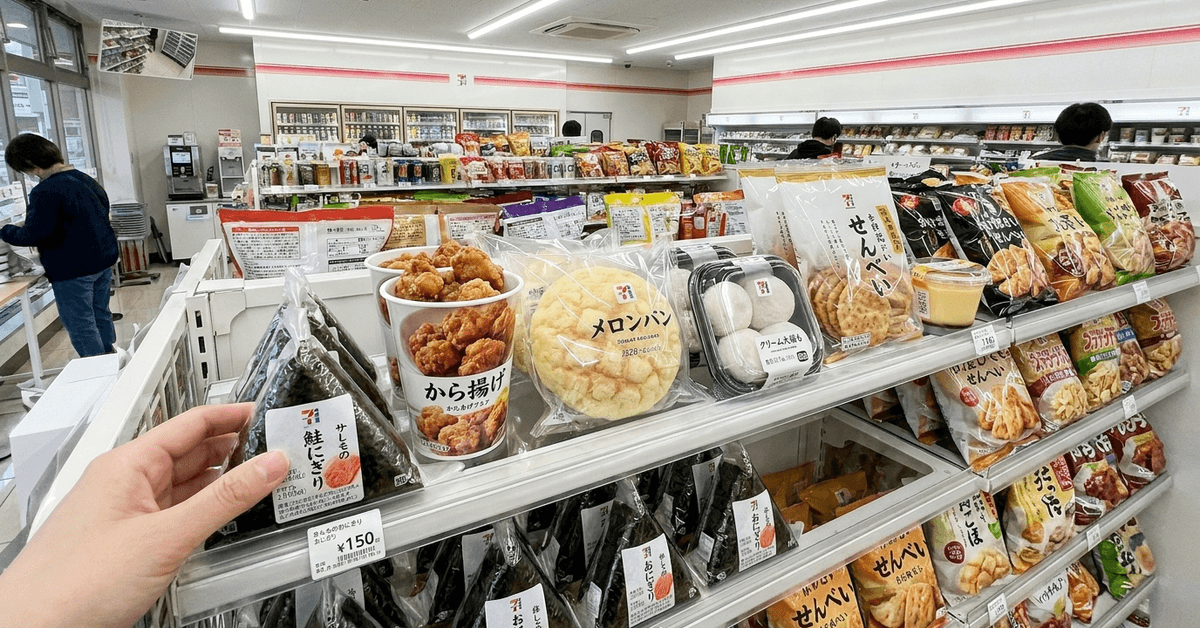
I think onigiri at ¥150 is a better lunch base than any ¥500 sandwich at a Tokyo café, and the sodium content is lower on the label too.
Karaage Chicken at the Hot Counter
Karaage chicken bites sit in the hot case near the register, usually priced at ¥198. These are Japanese-style fried chicken pieces, seasoned and juicy straight from the fryer.
They rotate batches throughout the day, so a midday visit tends to get you the freshest round.
Sweet Snacks Under ¥200 at Japanese 7-Eleven
The sweet snack section is where Japanese convenience stores pull ahead of anything you'll find overseas.
Melon pan, a fluffy bread with a cookie-crust top, costs around ¥140 for the plain version. Custard-filled varieties run slightly higher but still land under the ¥200 ceiling.
Cream Daifuku (Mochi) for ¥150 or Less
Cream daifuku is a soft mochi shell filled with whipped cream or sweet red bean paste. These cost around ¥150 at most 7-Eleven locations across Japan.
The texture is chewy, slightly sticky, and nothing like the frozen mochi you get at Western grocery stores.
Purin: Japan's Take on Custard Pudding
Purin is a smooth custard cup with caramel pooled at the bottom, priced just under ¥200. Think of it as flan's cooler cousin.
Grab one chilled and eat it with the tiny spoon included in the lid. Would you believe a ¥190 convenience store pudding could rival a sit-down dessert? It can.
Choco Pie and Cookie Sandwiches
Small packs of marshmallow or cream-filled cookie sandwiches run between ¥100 and ¥150. These are the snacks Japanese kids grow up eating after school, and they hold up for adults who want something sweet without committing to a full dessert.
Savory and Crunchy Picks Under ¥200
Not everything worth grabbing is rice or sweets. The salty, crunchy shelf has some of the best repeat-buy snacks in the store.
Senbei Rice Crackers
Senbei are baked or grilled rice crackers glazed with soy sauce or dusted with nori flakes. Single-serve bags cost under ¥200, and they're lighter than chips. Good for a train snack when you don't want greasy fingers.
Jagariko Potato Sticks
Jagariko is a cup of crunchy potato sticks that comes in flavors like cheese, salad, and seasonal limited editions. A full cup sits under ¥200. I'd pick Jagariko cheese over any bag of Lay's, and at ¥170 per cup in most Tokyo 7-Elevens, the price backs me up.
Healthy 7-Eleven Japan Snacks That Still Cost Under ¥200
A common assumption is that konbini food is all fried and sweet. That misses a whole section of the store.
Vegetable stick packs with cucumber, carrot, and a miso or mayo dip cost about ¥170. These sit in the refrigerated section near the salads and sandwiches.
Yogurt Drinks as a Grab-and-Go Option
Chilled drinking yogurt costs between ¥120 and ¥150, and it is one of the fastest-selling items in the cold case. Mildly sweet, tangy, and filling enough to count as a light breakfast. Pair one with an onigiri and your total stays well under ¥350.
Sliced Fruit Cups
Small cups of sliced melon, pineapple, or mixed fruit appear in the refrigerated aisle. They cost right around ¥200 and taste fresher than pre-cut fruit in American or European convenience stores.
Japan's food safety standards require conservative expiry labeling, so what's on the shelf was likely prepared that same morning.
How to Save Even More at 7-Eleven Japan
A few small habits stretch your yen further on repeat visits.
Things that cut costs without cutting quality:
- Nanaco point card: earns points on every purchase, and regulars report saving several hundred yen per week after a month of consistent use
- Limited-edition pricing: seasonal or new-release snacks sometimes launch at a lower introductory price to drive trial purchases
- Combo meal deals: some stores bundle a drink and a snack at a discount, though signage is often only in Japanese
- Bring a reusable bag: Japan's mandatory plastic bag fee is ¥3 to ¥5 per bag, which adds up across a two-week trip
The Nanaco digital card works through a mobile app, so you don't need a physical card if your phone supports it.
Cash, Tax, and Bag Fees: Small Details That Trip Up Tourists
Displayed prices at 7-Eleven Japan include tax. The number on the shelf is the number you pay at the register. No surprises.
Cash is still the safest bet for small purchases. Some machines and smaller franchise locations don't accept all international cards. The good news: 7-Eleven ATMs inside the store accept most foreign bank cards and charge reasonable withdrawal fees.
| Snack | Typical Price (¥) | Category |
|---|---|---|
| Onigiri (tuna mayo) | ¥120–¥180 | Savory, filling |
| Karaage chicken bites | ¥198 | Hot, protein |
| Melon pan | ¥140 | Sweet bread |
| Cream daifuku (mochi) | ¥150 | Sweet, chewy |
| Purin (custard pudding) | ~¥190 | Dessert |
| Senbei rice crackers | Under ¥200 | Crunchy, savory |
| Jagariko potato sticks | ~¥170 | Crunchy, salty |
| Vegetable sticks + dip | ~¥170 | Healthy |
| Yogurt drink | ¥120–¥150 | Cold, light |
| Choco pie / cookie sandwich | ¥100–¥150 | Sweet snack |
Karaage at ¥198 is the priciest item on this list, and it's still under $1.30 USD.
The Japan Guide convenience store page covers broader konbini culture and etiquette for first-time visitors.
Regional and Seasonal Flavors You Can Only Find Locally
Hokkaido 7-Eleven stores carry melon-flavored snacks and dairy products you won't see in Tokyo. Okinawa locations stock purple sweet potato treats and tropical fruit options. Kyoto branches sometimes feature matcha-heavy limited runs.
I would skip the generic Tokyo shelves on a second trip and head straight for regional exclusives in smaller cities. A seasonal Hokkaido melon cream daifuku at ¥180 is the kind of thing you can't order online or find outside that window.
Keep an eye on shelf tags marked with seasonal kanji or bright-colored "new" labels. Limited-edition runs sell out fast, especially during Golden Week and New Year periods.
Questions People Ask About 7-Eleven Japan Snacks Under ¥200
A few things come up repeatedly for anyone planning their first konbini snack run.
- Q: Can I find vegetarian or vegan snacks at 7-Eleven Japan?
Onigiri with umeboshi or kelp fillings, vegetable sticks, and certain senbei varieties are plant-based. Labeling is in Japanese, so using a translation app on the ingredient list saves guesswork. The selection is smaller than meat-based options but growing each year. - Q: Do 7-Eleven snack prices change between cities?
Prices shift slightly between regions. A tuna mayo onigiri might be ¥130 in Osaka and ¥150 in central Tokyo. The differences are small, usually within ¥10 to ¥30, but rural stores sometimes run lower than urban flagship locations. - Q: Are 7-Eleven Japan snacks safe for people with food allergies?
Packaging lists allergens in Japanese, and the seven major allergens (wheat, egg, milk, shrimp, crab, peanuts, buckwheat) are required by Japanese food labeling law to appear on every product. A translation app pointed at the allergen box on the back is the fastest way to check. - Q: What time of day has the freshest snacks?
Restocking happens multiple times daily, but early morning (around 7–9 AM) and late afternoon (around 4–6 PM) tend to have the newest batches of onigiri, karaage, and baked goods. Late-night visits still have good selection, just fewer hot items at the counter. - Q: Can I bring 7-Eleven snacks back home as souvenirs?
Sealed, shelf-stable items like senbei, Jagariko, and choco pies clear customs without issues. Fresh items like onigiri, mochi, and pudding cups won't survive a long flight. Packaged snacks make cheap, fun gifts that people rarely expect from a convenience store.
Conclusion
The best konbini snack run starts with ¥500 and zero expectations. Grab one thing sweet, one thing salty, and one thing you can't identify. That third pick is usually the one you remember longest.
Japan's 7-Eleven shelves rotate fast, so whatever caught your eye today might be gone next week.