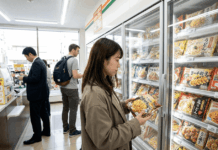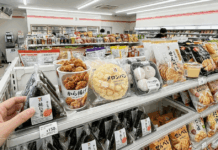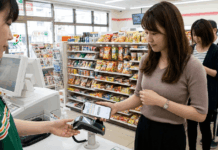
A 7-Eleven Japan frozen meal costs less than ¥500 and takes three minutes in a microwave. That's roughly $3.30 USD for something that tastes closer to a home-cooked Japanese dinner than any frozen aisle back home.
Most of these meals sit between 250 and 600 calories per serving. The packaging lists every ingredient and allergen in detail, thanks to Japan's strict food labeling laws.
This guide is for the budget-conscious traveler or exchange student landing in Japan for the first time, staring at a wall of freezer doors covered in kanji they can't read.
How to Pick a Frozen Meal When You Can't Read Japanese
The 7-Eleven freezer section rotates seasonally, mixing bowls, noodle packs, sides, and desserts on the same shelf. Two visual shortcuts cut through the language barrier fast.
Spot the "レンジ" (Renji) Label First
"レンジ" means microwave. If the package shows this word or has a small microwave illustration, you can heat the meal inside the container it comes in. No pots, no pans, no guessing.
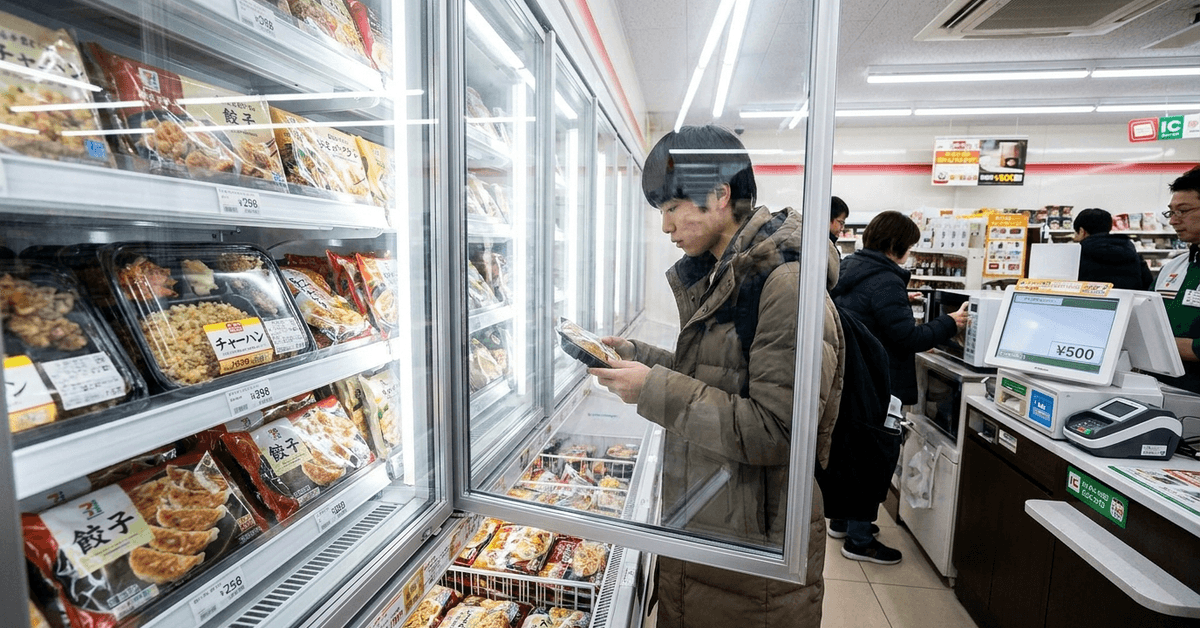
I would start every freezer aisle scan at this label because it eliminates about 30% of the options that need stovetop prep.
Tax-Included vs. Tax-Separate Pricing
Price tags sit directly below each product in yen. Some stores show tax-included prices; others list the base price with tax added at the register.
Meals labeled at ¥498 or under almost always ring up below the ¥500 mark. A few yen of variance happens between locations, but it's rare enough not to worry about.
10 Frozen Meals Worth Grabbing at 7-Eleven Japan
Every meal on this list costs under ¥500 and heats in a standard convenience store microwave. Availability shifts by season and region, but these ten stay in rotation more consistently than limited-edition runs.
Fried Rice (チャーハン, Chaahan)
Fried rice is the single best-selling frozen item in Japanese konbini for a reason. The 7-Eleven version has small pieces of pork, scrambled egg, and green onion, seasoned with soy and sesame oil. It works at any hour. Breakfast, lunch, 2 a.m. study fuel.
Chicken Nanban Bento (チキン南蛮弁当)
This southern-Japan specialty pairs fried chicken with tartar sauce and a bed of rice in one tray. The flavor leans tangy-sweet. Portion size beats most frozen bentos at this price point.
Curry Rice (カレーライス, Kare Raisu)
Japanese curry rice is thick, mild, and fragrant. It's a completely different animal from Indian or Thai curry. The 7-Eleven version comes with soft vegetables and small cuts of meat or tofu.
Spaghetti Napolitan (ナポリタン)
Napolitan is Japan's own twist on Italian pasta: spaghetti in a sweet tomato sauce with onions, bell peppers, mushrooms, and bits of sausage. It tastes nostalgic to Japanese diners the way mac and cheese does to Americans.
Oyako Don (親子丼)
A bowl of rice topped with simmered chicken and egg in a dashi-soy sauce base. Mild, comforting, zero spice. If your stomach is adjusting to new food or jet lag has you eating at odd hours, this one feels gentle.
Gyoza Dumplings (餃子)
Pan-fried pork and vegetable dumplings, sometimes packaged with dipping sauce. On their own, gyoza are more of a side than a meal. Pair them with a rice ball or a small salad for a full dinner under ¥500 total.
Yaki Udon (焼うどん)
Thick chewy udon noodles stir-fried with pork, cabbage, and a lightly sweet soy glaze. Yaki udon heats fast and fills you up. Cold-weather months make this one hit different.
Hamburg Steak (ハンバーグ)
Closer to a Salisbury steak than a burger. A juicy meat patty with demi-glace gravy, served alone or over rice. Not every location stocks it. When you find one, grab it.
Mapo Tofu (麻婆豆腐)
Tofu cubes, ground pork, and a spicy Sichuan-style bean paste sauce. This is the go-to if you want heat. Pair it with plain rice from the shelf next to the freezer.
Frozen Mini Pancakes (冷凍パンケーキ)
Not a meal, but a solid breakfast or snack. Fluffy mini pancakes that microwave in under 90 seconds. Add honey or fruit if you're eating at your hotel or Airbnb.
Calorie Counts and Dietary Restrictions at Japanese Konbini
Frozen meals at 7-Eleven Japan range from about 250 to 600 calories per serving. Japan's Consumer Affairs Agency requires all packaged food to display calories, protein, fat, carbohydrates, sodium, and allergen warnings on the label.
Vegan and Halal Options Are Still Limited
I think the biggest gap in 7-Eleven Japan's frozen lineup in 2026 is the near-absence of vegan, halal, and gluten-free meals.
A few plant-based items have appeared in Tokyo and Osaka stores, but outside major cities, options thin out fast. A translation app like Google Translate's camera mode can help decode ingredient lists on the spot.
Why I'd Skip the "Balanced Meal" Advice for Konbini Shopping
The standard suggestion for eating at convenience stores is to build a balanced plate: protein, carb, vegetable, repeat.
I would push back on that for 7-Eleven Japan under a ¥500 budget. Spending ¥350 on a frozen curry and then ¥200 on a side salad puts you over budget every single time.
A better strategy: pick one filling frozen meal in the ¥400 range and grab a free cup of water or hot tea from the counter. Save the side dishes for meals where the main costs under ¥300.
Smart Ways to Stretch ¥500 at a Japanese 7-Eleven
The difference between eating well and eating poorly on a konbini budget comes down to a few small habits.
Stores allow you to reheat meals in their in-store microwave at no charge. Most staff will hand you disposable chopsticks and napkins if you ask. The phrase "ohashi kudasai" gets the job done.
Staff at 7-Eleven stores accept Visa, Mastercard, and IC cards like Suica, so you rarely need cash.
Add Cheap Toppings to Upgrade Frozen Meals
Locals add instant pickles, dried seaweed, or a sprinkle of shichimi togarashi (seven-spice blend) to frozen bowls.
A small bottle of soy sauce or a pack of furikake rice seasoning costs under ¥150 and lasts across multiple meals. That turns a plain fried rice into something closer to a homemade dinner.
The seasonal limited-edition releases can be fun to try. But if a flavor sounds unusual and costs close to ¥500, your safest bet is still a classic like chaahan or gyoza. The staples earned their shelf space for a reason.
| Meal | Approx. Price (¥) | Calories | Best For |
|---|---|---|---|
| Fried Rice (チャーハン) | ~¥350 | ~450 | Quick any-hour meal |
| Chicken Nanban Bento | ~¥480 | ~550 | Big portions |
| Curry Rice | ~¥400 | ~500 | Comfort food |
| Oyako Don | ~¥420 | ~400 | Mild, easy on the stomach |
| Gyoza (6-pack) | ~¥280 | ~300 | Side dish or light meal |
| Mapo Tofu | ~¥400 | ~350 | Spicy craving |
The fried rice and gyoza give you the most flexibility because they pair well with almost any other cheap add-on from the store.
Questions People Ask About 7-Eleven Japan Frozen Meals
These come up a lot among first-time visitors to Japan who are figuring out konbini culture on a tight budget.
- Q: Can I eat 7-Eleven frozen meals if I have food allergies?
Japan's labeling laws require disclosure of 28 specific allergens on packaged food. The list is printed on the back of every frozen meal. Peanuts, wheat, eggs, milk, shrimp, crab, and buckwheat are among the mandatory items. A translation app pointed at the allergen box is your fastest safety check. - Q: Do all 7-Eleven locations in Japan carry the same frozen meals?
No. Stores in rural areas stock fewer frozen options than urban locations. Regional specialties also appear in certain prefectures only. Staples like fried rice and curry rice show up almost everywhere, though. - Q: Are 7-Eleven frozen meals cheaper than cooking in Japan?
Per meal, yes. A single frozen curry at ¥400 beats buying rice, curry roux, vegetables, and meat separately. The math flips if you're cooking for multiple people or staying longer than two weeks, when buying groceries in bulk starts making more sense. - Q: Is it rude to eat inside a 7-Eleven in Japan?
Some stores have a small eat-in area with chairs and a counter. Others don't. Eating while standing at the counter or in the aisles is generally frowned upon. Take the food outside or back to your accommodation if there's no designated eating space. - Q: Can I reheat frozen meals at the store even if I didn't buy them there?
Technically the microwave is for in-store purchases. Nobody checks receipts at the microwave, but using it for outside food would be considered poor etiquette. Stick to items you just bought at that location.
Conclusion
A ¥500 budget at 7-Eleven Japan opens up more meal variety than most travelers expect. The frozen section alone covers rice bowls, noodles, curry, dumplings, and even dessert pancakes.
Taste, labeling, and food safety standards in Japanese konbini run well above what "convenience store food" suggests in other countries. Grab a chaahan, ask for chopsticks, and see for yourself.